
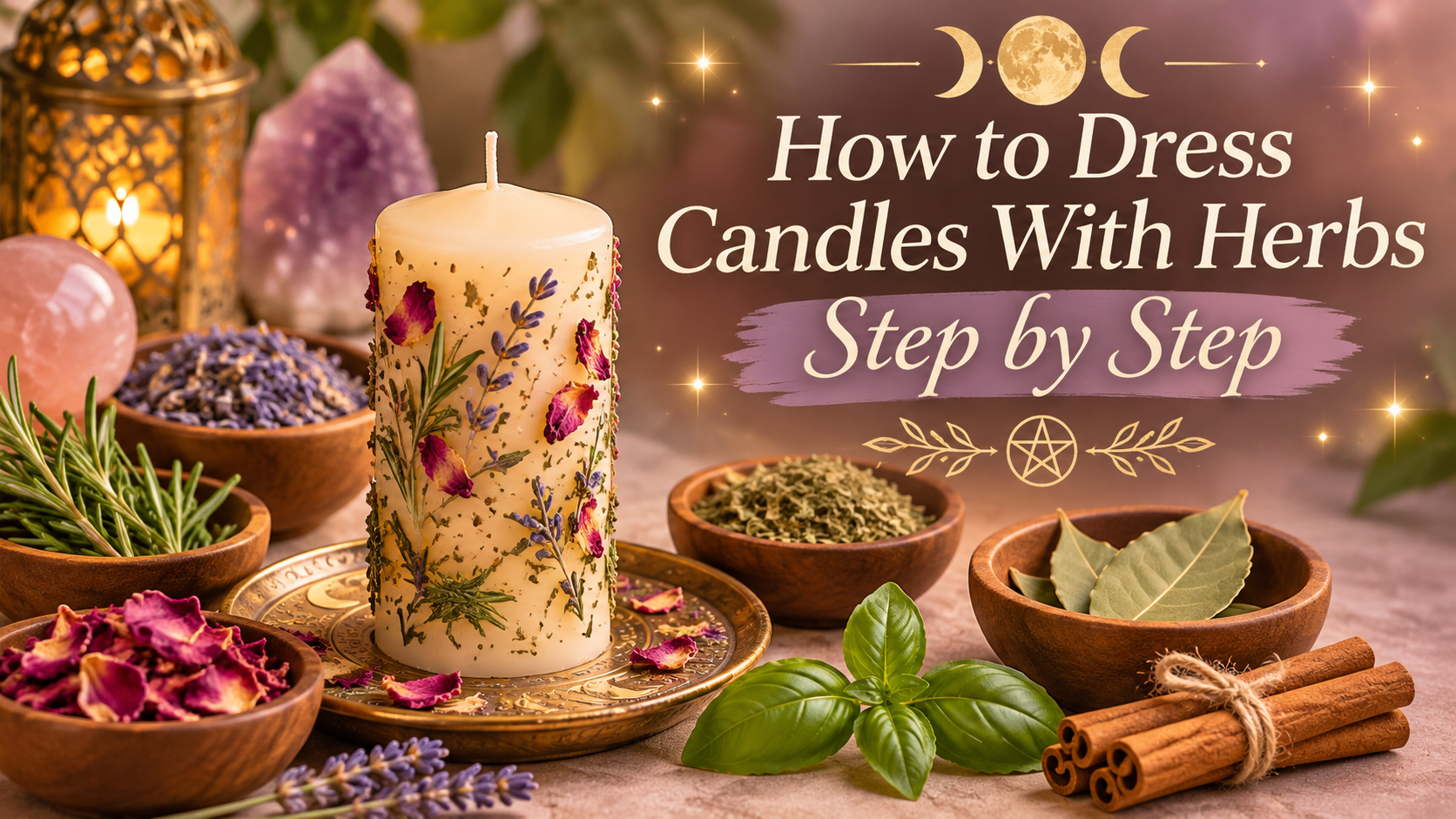
Have you ever lit a candle, whispered a wish, and wondered whether your intention was strong enough to create change?
Perhaps you’re trying to attract love, improve your finances, protect your home, or release emotional energy from a painful experience.
You’ve tried positive affirmations, visualization, and manifestation techniques. Yet something still feels missing.
What if your next spiritual ritual involved something as simple as a candle, a few carefully chosen herbs, and a clear intention?
For centuries, spiritual practitioners have incorporated candles and herbs into rituals for protection, prosperity, love, healing, and personal transformation.
Each herb carries traditional spiritual associations. Candle colors hold symbolic meanings. Your intention gives the ritual its personal purpose.
Learning how to dress candles with herbs helps you create a meaningful spiritual practice instead of simply lighting a candle and hoping for results.
The secret isn’t using expensive supplies or complicated spells.
Your focus, preparation, and connection to your intention matter more than the number of ingredients you collect.
Before beginning, you’ll want to understand which herbs complement your goals, how to prepare your candle, and which candle-dressing methods are appropriate for decorative rituals versus burning candles.
Ready to create your first herbal candle ritual?
Need Spiritual Clarity Before Your Next Manifestation Ritual?
Sometimes, the biggest challenge isn’t knowing which herbs to use. It’s understanding what’s blocking your progress or where to focus your energy.
During a private psychic reading with me, we’ll explore your situation, discuss the choices ahead, and identify practical steps to help you move forward.
Book a Private Psychic Reading With Me
What Does It Mean to Dress a Candle With Herbs?
Candle dressing is a traditional spiritual practice involving the preparation of a candle with specific intentions, herbs, oils, symbols, or prayers.
Practitioners often associate this process with candle magic, manifestation rituals, spiritual protection, and intention-setting.
Rather than treating an ordinary candle as a decorative object, dressing transforms its role into a personal spiritual symbol.
For example, someone hoping to improve their financial situation might choose a green candle with basil and cinnamon as symbolic ingredients.
Another person seeking emotional healing might select a pink candle alongside lavender and rose petals.
Both rituals focus on different intentions, even though their basic preparations share similar steps.
Traditional candle dressing often involves applying oils and dried herbs directly to wax. These decorative combinations create a fire hazard when someone lights the candle.
A safer approach separates herbal dressing from burning.
Decorative herb-covered candles work as unlit ritual objects. Candles intended for burning should remain free of added herbs, oils, and other combustible decorations.
You still incorporate the spiritual symbolism of herbs by placing them in a separate bowl away from the flame.
This distinction allows beginners to explore herbal candle magic without introducing unnecessary fire risks.
Why Do People Use Herbs in Candle Magic?
Herbs have appeared in spiritual traditions, folk practices, seasonal ceremonies, and household rituals throughout history.
Different cultures assign different meanings to particular plants.
Rosemary often represents protection and remembrance.
Basil symbolizes prosperity and abundance in certain magical traditions.
Lavender frequently represents peace, purification, and emotional balance.
By choosing herbs according to their traditional associations, you create a symbolic connection between your spiritual goal and the materials involved.
Consider someone feeling emotionally overwhelmed after a breakup.
A lavender ritual might encourage them to focus on releasing resentment, rebuilding confidence, and establishing healthier emotional boundaries.
The herb doesn’t make those changes happen automatically.
Instead, the ritual provides a meaningful opportunity to acknowledge feelings, set intentions, and decide how to respond to difficult circumstances.
Your mindset and actions remain essential throughout the process.
Choosing the Right Candle Color for Your Intention
Before learning how to dress a candle with herbs, choose a candle color associated with your spiritual goal.
Color symbolism helps establish the theme of your ritual.
Although different spiritual traditions interpret colors differently, the following associations offer a practical starting point.
White Candles for Cleansing and Spiritual Clarity
White candles commonly symbolize purity, peace, spiritual guidance, and new beginnings.
Choose white when you want to clear emotional distractions, reflect on a difficult decision, or reconnect with your intuition.
This color also works as a general-purpose candle when your preferred color isn’t available.
Suggested herbs: Rosemary, lavender, and chamomile.
Green Candles for Money and Prosperity
Green represents financial growth, abundance, stability, and opportunity in popular candle magic traditions.
Someone working toward a new career, increased business income, or healthier financial habits might choose this color.
Focus your intention on creating opportunities and taking responsible financial action.
Suggested herbs: Basil, bay leaf, and cinnamon.
Pink Candles for Love and Emotional Healing
Pink symbolizes affection, friendship, self-love, compassion, and emotional connection.
Select pink when your goal involves developing healthier relationships, strengthening self-worth, or opening yourself to love.
An intention focused on mutual respect offers a healthier direction than attempting to control another person’s feelings.
Suggested herbs: Rose petals, lavender, and chamomile.
Red Candles for Passion and Confidence
Red traditionally represents courage, determination, desire, motivation, and passionate energy.
Use this color when you want to strengthen your confidence or reconnect with personal motivation.
A red candle ritual might accompany an intention to pursue a creative project or communicate your needs more confidently.
Suggested herbs: Cinnamon, rosemary, and ginger.
Blue Candles for Peace and Communication
Blue symbolizes calmness, understanding, emotional balance, and honest communication.
Choose blue before a difficult conversation or when your thoughts feel scattered.
Pairing this color with a reflective practice helps establish a peaceful atmosphere.
Suggested herbs: Lavender, chamomile, and thyme.
Purple Candles for Intuition and Spiritual Growth
Purple often represents psychic awareness, wisdom, spiritual development, and inner reflection.
Select purple for meditation, intuitive journaling, or tarot practice.
This color suits rituals centered on understanding your instincts and recognizing recurring emotional patterns.
Suggested herbs: Mugwort, rosemary, and lavender.
Mugwort requires extra care around pregnancy, allergies, and pets. Using rosemary or lavender instead offers a simpler option.
Black Candles for Protection and Releasing Energy
Black candles traditionally symbolize protection, boundaries, endings, and the release of unwanted influences.
Choose black when you want to let go of an unhealthy attachment or strengthen your personal boundaries.
Rather than fearing this color, view it as a symbol of closure and self-protection.
Suggested herbs: Rosemary, bay leaf, and thyme.
10 Powerful Herbs for Dressing Candles and Their Spiritual Meanings
Choosing the right herbs becomes easier when you understand their traditional associations.
You don’t need an extensive herbal collection.
Start with a few familiar plants and develop your knowledge gradually.
1. Rosemary for Protection and Cleansing
Rosemary traditionally represents purification, protection, remembrance, and mental clarity.
Spiritual practitioners often associate this herb with clearing unwanted influences and strengthening personal boundaries.
Consider rosemary for a protection candle ritual or an intention focused on creating a peaceful home.
2. Basil for Money and Abundance
Basil holds associations with prosperity, good fortune, and financial opportunities in various folk traditions.
Its symbolism makes it popular in money manifestation rituals.
Choose basil when setting intentions around career development, business growth, or responsible financial decisions.
3. Lavender for Peace and Emotional Healing
Lavender symbolizes relaxation, emotional harmony, spiritual cleansing, and peaceful relationships.
Its familiar fragrance also creates a pleasant atmosphere when used appropriately away from flames.
Pair lavender with an intention to release stress or strengthen your emotional well-being.
4. Rose Petals for Love and Self-Worth
Roses traditionally symbolize romance, affection, beauty, and emotional connection.
Pink or red rose petals often appear in love-focused spiritual practices.
Select rose petals when working on self-love, forgiveness, or creating space for healthier relationships.
5. Cinnamon for Prosperity and Motivation
Cinnamon represents abundance, attraction, warmth, and personal motivation in popular candle magic.
Practitioners frequently include it in prosperity rituals.
Its bark, powder, and essential oil are combustible, so keep cinnamon in a separate ritual bowl whenever lighting a candle.
6. Bay Leaves for Wishes and Success
Bay leaves traditionally symbolize victory, achievement, wisdom, and success.
Writing an intention on a bay leaf is a familiar practice in modern manifestation rituals.
Instead of burning the leaf, place your written intention in a safe location near your journal or on a separate altar shelf.
7. Chamomile for Peace and Good Fortune
Chamomile often represents tranquility, gentle healing, favorable outcomes, and emotional comfort.
Choose this herb when your intention focuses on patience or restoring balance.
Its symbolism works well with white, pink, yellow, or blue candles.
8. Thyme for Courage and Protection
Thyme traditionally symbolizes courage, strength, purification, and protection.
Include thyme in rituals centered on developing confidence or moving past emotional fear.
Its association with bravery makes it useful for intentions involving difficult personal decisions.
9. Peppermint for Clarity and Fresh Beginnings
Peppermint represents freshness, mental alertness, renewal, and clear thinking in modern herbal magic.
Choose this herb when beginning a new project or releasing an unproductive habit.
Keep peppermint products, especially concentrated oils, away from pets and open flames.
10. Calendula for Confidence and Positive Energy
Calendula’s golden flowers symbolize optimism, warmth, success, and personal strength.
Practitioners sometimes connect calendula with solar energy and joyful beginnings.
Consider this flower when your intention involves creativity, recognition, or developing confidence.
What Supplies Do You Need to Dress Candles With Herbs?
A beginner’s herbal candle ritual doesn’t require expensive tools.
Gather the following supplies before starting:
- One candle in your preferred color
- Two or three herbs corresponding to your intention
- A small bowl for mixing herbs
- A spoon or mortar and pestle
- A clean cloth
- Paper and a pen for writing your intention
- A stable, fire-resistant candleholder
- A separate bowl for your herbal ingredients
- A lighter or matches if you plan to burn an undecorated candle
- A journal for recording your reflections
For a decorative candle you will never light, a small amount of plain carrier oil, such as olive oil, serves as an optional adhesive for attaching herbs to the wax.
Never add oil or dried herbs to a candle you intend to burn.
Keep your ritual area organized and remove loose paper, cloth, plants, and decorations from the burning area.
Fire-safety guidance recommends leaving at least 12 inches between a burning candle and anything combustible.
Once your materials are ready, begin preparing your spiritual intention.
How to Dress Candles With Herbs Step by Step
The following steps explain two distinct approaches.
The first creates a traditional-looking herb-dressed candle for unlit spiritual use.
The second incorporates herbs symbolically while allowing you to burn an undecorated candle.
Both methods offer opportunities for reflection, prayer, and intention-setting.
Step 1: Decide What You Want Your Candle Ritual to Represent
Every meaningful candle ritual begins with a clear purpose.
Before selecting ingredients, ask yourself what you want to change, strengthen, or release.
Are you seeking healthier relationships?
Would greater financial stability help you feel secure?
Does your emotional well-being need more attention?
Perhaps you’re preparing for a new chapter and want to approach it with confidence.
Choose one central intention rather than trying to address every area of your life at once.
Specific goals help direct your attention.
For example, instead of saying, “I want more money,” write:
“I welcome opportunities to grow my income through meaningful work and responsible financial decisions.”
For emotional healing, try:
“I release unhealthy attachments and make room for relationships built on honesty, respect, and mutual care.”
Keep your written intention nearby throughout the ritual.
Step 2: Select Your Candle Based on Your Goal
Your candle should reflect the spiritual theme you identified.
A green candle suits prosperity rituals, while pink works well for self-love and emotional connection.
White offers flexibility for spiritual clarity and general intention-setting.
Choose a candle with clear manufacturer instructions and a suitable holder if you plan to light it.
For unlit decorative dressing, a plain pillar candle provides a convenient surface for applying herbs.
Avoid choosing a candle solely because its appearance feels elaborate.
Simple materials often make the ritual easier to understand and repeat.
Step 3: Choose Two or Three Complementary Herbs
Herbal selection should support your intention without becoming unnecessarily complicated.
For money manifestation, combine basil with a bay leaf.
A peaceful-home ritual might feature rosemary and lavender.
Self-love intentions often pair rose petals with chamomile.
Spend a moment considering the meaning of each plant.
Remember, symbolic associations reflect spiritual tradition and personal belief rather than a guarantee of specific results.
Your combination doesn’t need to match someone else’s recipe.
A meaningful choice is more important than following a complicated formula.
Step 4: Prepare Your Spiritual Space
Create a comfortable environment where you feel focused and relaxed.
Clear unnecessary objects from your table.
Silence distracting notifications.
Arrange your supplies within easy reach, away from the candle’s future burning area.
Some practitioners begin with a short prayer or meditation.
Others prefer sitting quietly and taking several slow breaths.
Use whichever approach feels consistent with your spiritual beliefs.
You might say:
“I welcome peace, clarity, and positive intentions into this space. I release distractions and focus on the choices within my control.”
Allow yourself a moment to reflect before proceeding.
Step 5: Cleanse and Prepare Your Candle Symbolically
Spiritual cleansing often represents the beginning of a new intention.
Start by wiping dust or debris from the candle with a clean, dry cloth.
Avoid applying water, oils, or herbs to the wick.
Hold the unlit candle gently between your hands if its size permits.
Visualize yourself releasing worry and creating room for a fresh beginning.
Some practitioners imagine a soft white light surrounding the candle.
Others say a simple prayer or speak their intention aloud.
No special visualization skill is necessary.
The purpose of this step is to help you focus.
Step 6: Prepare Your Herbal Blend
Place your chosen herbs into a clean bowl.
Gently break apart larger pieces if you are preparing a decorative candle.
For a burning-candle ritual, keeping whole leaves or recognizable plant pieces in a separate bowl is often more convenient.
Avoid creating airborne herbal dust.
Take a moment to acknowledge each ingredient’s symbolic meaning.
For example, while preparing a prosperity blend, say:
“Basil represents opportunities for financial growth. Bay leaf represents success and achievement. Together, these herbs remind me to recognize opportunities and act with confidence.”
Your words don’t need to follow an exact script.
Sincere intention matters more than memorizing a particular affirmation.
Feeling Stuck Despite Your Manifestation Efforts?
Sometimes, you set a clear goal yet feel unsure which direction to take next.
Perhaps a relationship keeps repeating the same pattern, your financial goals feel out of reach, or you’re questioning whether your intuition is guiding you correctly.
During a private psychic reading with me, we’ll explore your concerns, the patterns surrounding your situation, and the next steps available to you.
Book Your Private Psychic Reading With Me
Step 7: Choose Your Candle-Dressing Method
At this point, decide whether you want an herb-covered candle for unlit ritual work or a burning candle accompanied by herbs.
Method One: Traditional Decorative Herb Dressing
Choose this approach when you want a candle with herbs attached directly to its surface.
This finished candle must remain unlit.
Begin with a cool, clean pillar candle.
Apply a tiny amount of plain carrier oil to a small section of wax, keeping the wick untouched.
Press a few dried herbs onto the lightly oiled area.
Continue adding small decorative accents until the candle reflects your desired appearance.
Avoid excessive oil, dripping liquid, or thick layers of plant material.
After finishing, place the candle on a suitable display surface and use it as a symbolic object during meditation or prayer.
Never light an herb-covered decorative candle, even after the oil dries.
Method Two: Herbal Candle Ritual With a Burning Candle
Choose this approach when lighting a flame forms part of your spiritual practice.
Leave the candle completely free of herbs, oils, powders, and added decorations.
Arrange your selected herbs in a separate bowl at least 12 inches away from the candle.
Position the undecorated candle securely inside its designated holder.
Allow the herbal bowl to represent your intention without exposing the plants to direct heat or flame.
This approach preserves the symbolic relationship between herbs and candles while reducing the fire risks associated with combustible decorations.
Step 8: Add Symbols or Written Intentions
Symbolic markings provide another opportunity to personalize your ritual.
For a decorative candle, you might lightly engrave a heart for love, a word such as “peace,” or a symbol representing your goal.
Use a suitable blunt tool on cool wax and avoid damaging the wick or the candle’s structure.
If you intend to burn your candle, write your intention on a separate piece of paper instead of carving the wax.
Place the written message in your journal or somewhere outside the candle’s burning area.
Your words might include:
“I choose peace over confusion.”
“I welcome healthy financial opportunities.”
“My intuition deserves attention and respect.”
“I release what no longer supports my well-being.”
Let your chosen statement guide the ritual.
Step 9: Focus Your Energy and Speak Your Intention
Hold your hands near the prepared ritual materials without touching the wick or flame.
Close your eyes and imagine yourself moving toward your goal.
For prosperity, picture yourself making confident business decisions, managing your finances responsibly, or recognizing an unexpected opportunity.
For love, imagine relationships where honesty and mutual respect feel natural.
For protection, visualize yourself maintaining boundaries and responding calmly to stressful situations.
Speak an affirmation matching your purpose.
Example:
“With clear intentions and an open heart, I welcome positive opportunities into my life. I trust myself to recognize the path forward and take meaningful action.”
Repeat your statement slowly.
Notice how your thoughts respond.
If doubts arise, acknowledge them without forcing yourself to feel positive.
Step 10: Light Your Candle or Begin Your Unlit Ritual
For the burning-candle method, confirm your candle remains free of decorative materials.
Position the herb bowl away from the candle, trim the wick according to the manufacturer’s instructions, and light the candle.
Keep the burning candle within sight and never leave it unattended.
Sit comfortably and focus on your intention for several minutes.
Watch the flame without staring continuously or attempting to interpret every movement as a spiritual message.
For the decorative method, leave the herb-dressed candle unlit.
You might place it on your altar while meditating, praying, journaling, or practicing tarot.
An LED candle offers another option if you prefer a flickering light without an open flame.
Both approaches provide opportunities for intentional reflection.
Step 11: Release the Need to Control the Outcome
After completing your intention-setting, notice whether you feel tempted to monitor the outcome constantly.
Manifestation rituals often become stressful when someone expects immediate proof of success.
Perhaps you want an ex-partner to contact you.
Alternatively, you might hope to receive a new job offer within days.
Your ritual doesn’t establish control over another person’s decisions or guarantee a particular event.
Instead, use the practice to clarify what you want and where your attention belongs.
A love ritual might encourage healthier communication, stronger boundaries, and greater self-respect.
Financial manifestation might motivate you to apply for opportunities, review your budget, or develop new professional skills.
Release the expectation of instant results while remaining open to meaningful action.
Step 12: Close Your Ritual and Record Your Experience
Finish your ritual by expressing gratitude for the opportunity to reflect.
For an open-flame ritual, extinguish the candle safely according to its instructions.
Never use water to extinguish hot candle wax.
Allow the holder and wax to cool completely before moving anything.
Return your herbal ingredients to a suitable storage container or dispose of them responsibly.
Keep decorative herb-dressed candles labeled for unlit use.
Finally, write a brief journal entry.
Record your intention, selected herbs, candle color, emotional state, and any insights gained during the experience.
Over time, reviewing these entries helps you notice how your goals and decisions evolve.
How to Dress a Candle for Love and Self-Love
Love-focused candle magic often centers on attraction, emotional healing, confidence, and meaningful connection.
For a beginner-friendly self-love ritual, choose a pink candle with rose petals and lavender in a separate herbal bowl.
Start by identifying one relationship pattern you want to improve.
Perhaps you struggle to speak up when something bothers you.
Alternatively, you might consistently prioritize someone else’s needs while neglecting your own.
Write an affirmation expressing the relationship qualities you want to develop.
Example:
“I deserve relationships built on respect, honesty, kindness, and emotional consistency. I welcome connections where both people feel valued.”
Position the herb bowl away from your burning candle and spend several minutes reflecting on your statement.
Imagine responding differently the next time someone crosses a personal boundary.
Rather than focusing on forcing another individual to love you, direct your attention toward creating healthier relationship choices.
Afterward, identify one action supporting your intention.
That action might involve expressing your needs clearly or stepping away from an unhealthy conversation.
How to Dress a Candle for Money and Prosperity
Prosperity candle rituals often feature green or gold candles alongside basil, bay leaves, and cinnamon.
Each ingredient represents a different element of financial intention.
Basil symbolizes prosperity.
Bay leaf represents achievement.
Cinnamon traditionally symbolizes attraction, motivation, and abundance.
For this ritual, place the herbs in a bowl away from your candle rather than attaching them to the wax.
Write a financial goal with a measurable outcome.
For example:
“I am working toward increasing my monthly income through new opportunities, consistent effort, and sound financial decisions.”
Light your undecorated candle and spend a few minutes imagining how reaching your goal would affect your daily life.
Consider what achieving greater financial stability means to you.
Would you feel more confident handling unexpected expenses?
Might additional income allow you to invest in your business or reduce debt?
Use the ritual to identify your next practical step.
Financial abundance involves choices and opportunities alongside your spiritual beliefs.
How to Dress a Candle for Protection and Cleansing
Protection rituals offer a symbolic way to strengthen boundaries, release emotional burdens, and create a peaceful environment.
A white or black candle works well for this intention.
Choose rosemary, thyme, or bay leaf for your herbal bowl.
Begin by identifying what you want to protect.
Perhaps your goal involves preserving your emotional energy around difficult relatives.
Another possibility involves reducing negative self-talk or establishing boundaries with someone who repeatedly dismisses your feelings.
Write an intention focused on your own actions.
Example:
“I protect my peace through healthy boundaries, clear decisions, and respect for my emotional needs.”
During the ritual, imagine yourself responding calmly to challenging situations.
Picture choosing when to participate in a conversation and when to walk away.
Once finished, consider one boundary you want to practice during the coming week.
Protection rituals work especially well as reminders of the choices available to you.
How to Dress a Candle for Spiritual Clarity and Intuition
Intuition-focused rituals frequently involve purple or white candles.
Rosemary and lavender offer familiar herbal associations with clarity, peace, and spiritual reflection.
Prepare a quiet environment and write down one question requiring thoughtful attention.
For example:
“What am I overlooking in my current situation?”
“Which decision aligns with my values?”
“Where do I need stronger personal boundaries?”
Place your herbs away from the candle and begin a short meditation.
Notice which thoughts arise without immediately treating them as predictions or spiritual messages.
If you enjoy tarot, draw a single card after your meditation.
Consider how its symbolism relates to your question.
Record your interpretation in a journal and revisit it later with a clear mind.
Intuitive practices often become more useful when you combine personal reflection with practical observation.
Should You Use Fresh or Dried Herbs for Candle Dressing?
Dried herbs remain popular in traditional candle magic because they are easy to store, measure, and arrange.
Fresh herbs offer their own appeal through color, scent, and personal symbolism.
Neither form automatically makes an intention more powerful.
For unlit decorative candles, thoroughly dried plant materials are easier to attach to wax than fresh leaves.
Fresh plants contain moisture, deteriorate quickly, and create storage problems.
For burning-candle rituals, fresh or dried herbs belong in a separate container away from heat and flame.
Consider herb quality, cleanliness, and your household environment before selecting ingredients.
Avoid plants you cannot identify.
Check for allergies and keep herbs out of reach of pets or children who might ingest them.
Concentrated essential oils deserve additional care because they irritate skin, pose risks to animals, and introduce flammable materials.
A simple herbal bowl often provides everything needed for symbolic candle work.
Do You Have to Use Essential Oils When Dressing Candles?
Essential oils appear frequently in traditional candle-dressing instructions.
Some practitioners choose oils because they associate particular fragrances with love, abundance, protection, or emotional balance.
Yet essential oils aren’t necessary for an effective intention-setting ritual.
For a candle you plan to light, avoid adding essential oils or carrier oils to the wax or wick.
Extra substances affect how candles burn and introduce safety concerns.
An undecorated candle paired with an external herbal bowl provides a straightforward alternative.
For an unlit decorative candle, a small amount of plain carrier oil serves as an optional adhesive.
You also have the option to skip oil entirely and arrange herbs beside the decorative candle.
Your ritual’s meaning doesn’t depend on using every ingredient found in a traditional recipe.
When Is the Best Time to Dress a Candle With Herbs?
Some spiritual practitioners select specific moon phases or days of the week when preparing candle rituals.
These timing traditions provide symbolic structure, although they don’t guarantee results.
New Moon for Fresh Beginnings
The new moon traditionally represents renewal, intention-setting, and fresh opportunities.
Choose this phase when planning a new project, beginning a personal growth practice, or setting financial goals.
Waxing Moon for Growth and Attraction
The waxing moon symbolizes development, momentum, and progress.
Prosperity, confidence, and self-improvement intentions often align with this phase.
Full Moon for Reflection and Awareness
The full moon commonly represents illumination, emotional awareness, and spiritual reflection.
Use this period to review your progress and acknowledge lessons from recent experiences.
Waning Moon for Releasing and Letting Go
The waning moon traditionally symbolizes endings, emotional release, and clearing unwanted habits.
Choose this phase when working on boundaries, forgiveness, or personal closure.
Do You Need to Wait for a Specific Moon Phase?
No particular moon phase is required.
If you’re ready to work on an intention today, begin today.
The moon’s symbolism offers a framework for reflection rather than a strict requirement.
Consistency matters more than choosing a supposedly perfect date.
9 Common Mistakes to Avoid When Dressing Candles With Herbs
Learning candle magic becomes easier when you recognize mistakes before they happen.
1. Using Too Many Different Herbs
Combining numerous ingredients often makes your ritual unnecessarily complicated.
Choose two or three herbs with meanings connected to your purpose.
A focused blend is easier to prepare and understand.
2. Putting Herbs Directly Into a Burning Candle
Dried herbs, flower petals, and leaves are combustible.
Attaching them to a candle intended for burning creates a fire hazard.
Keep botanical ingredients separate from open flames.
3. Adding Too Much Oil
Excessive oil creates messy surfaces and introduces additional burning risks.
Avoid applying oils to any candle you intend to light.
Decorative candles should remain unlit after adding herbs or oil.
4. Setting an Unclear Intention
Vague goals make it difficult to determine which actions support your progress.
Replace “I want everything to improve” with a statement focused on one meaningful change.
Specific intentions help organize your thoughts.
5. Trying to Control Someone Else’s Feelings
Love-focused rituals sometimes encourage people to concentrate entirely on another person’s behavior.
Rather than seeking control, focus on mutual affection, emotional availability, and healthy relationship choices.
Respecting another person’s autonomy belongs at the center of meaningful connection.
6. Expecting Immediate Results
A candle ritual doesn’t guarantee a financial windfall, romantic reconciliation, or sudden transformation.
Viewing spiritual work as a reflective practice creates more realistic expectations.
Continue taking practical steps toward your goals.
7. Ignoring Candle Safety
Open flames require attention.
Keep burning candles away from curtains, paper, herbs, clothing, pets, and other combustible materials.
Never leave a lit candle unattended.
8. Repeating Rituals From Fear
Repeatedly lighting candles because you’re afraid something bad will happen turns a reflective practice into a source of stress.
Choose a ritual schedule supporting calm, intentional reflection.
Give yourself permission to stop when you feel finished.
9. Forgetting Your Personal Responsibility
Spiritual intention doesn’t replace communication, planning, budgeting, or responsible decision-making.
Use candle rituals to clarify your goals.
Then take actions supporting the future you want to create.
How Do You Know If Your Herbal Candle Ritual Is Working?
After completing a ritual, some people begin looking for unusual signs.
Perhaps they notice repeating numbers, unexpected coincidences, or changes in a candle flame.
Others feel more optimistic or emotionally settled.
These experiences hold different meanings depending on personal beliefs.
Yet no specific flame movement, wax pattern, or coincidence proves your intention will manifest.
A more useful approach involves observing changes in your thoughts, decisions, and behavior.
Consider the following questions:
- Do you feel clearer about your goal?
- Have you identified an action worth taking?
- Are you approaching difficult situations with more confidence?
- Have your personal boundaries improved?
- Are you making choices consistent with your intention?
Positive progress sometimes appears through ordinary decisions rather than dramatic events.
For example, a prosperity ritual might motivate you to apply for a new position.
A self-love ritual might encourage you to stop pursuing someone whose behavior feels inconsistent.
Your reflection becomes meaningful when it supports healthier action.
Frequently Asked Questions About Dressing Candles With Herbs
What Does Dressing a Candle Mean in Witchcraft?
Dressing a candle refers to preparing it for a spiritual purpose through intention, symbolic ingredients, prayer, or ritual actions.
Traditional methods often involve herbs and oils applied to wax.
For safety, reserve herb-covered candles for unlit decorative use and keep combustible ingredients separate from candles you plan to burn.
Which Herbs Are Best for Beginners?
Rosemary, basil, lavender, chamomile, and bay leaves offer familiar starting points.
Each plant has established associations within various folk and spiritual practices.
Select herbs according to your intention and learn their meanings before creating complicated combinations.
How Do You Make Herbs Stick to a Candle?
For an unlit decorative candle, a trace of plain carrier oil helps hold small dried herbs against the wax.
Another option involves arranging herbs around the candle as part of a separate decorative display.
Never light a candle with herbs or oils attached to its surface.
Is It Safe to Burn Candles With Dried Herbs?
Adding dried leaves, flowers, or other botanical ingredients to a candle intended for burning creates a fire hazard.
Loose materials might ignite independently and interfere with the candle’s normal burning behavior.
Keep herbs at least 12 inches away from lit candles and follow the candle manufacturer’s safety instructions.
Do You Need a Special Candle for Manifestation?
Ordinary, undecorated candles work for intention-setting rituals.
Choose a suitable color and a candle designed for safe use in its holder.
An LED candle also serves as a symbolic alternative.
What Happens If Your Candle Goes Out During a Ritual?
An extinguished flame doesn’t automatically indicate spiritual failure, rejection, or negative energy.
Air movement, wick condition, and candle design influence burning behavior.
Check the manufacturer’s instructions and examine the candle for potential safety concerns before deciding whether to relight it.
Is Candle Dressing Considered Witchcraft?
Herbal candle dressing appears in contemporary witchcraft, folk magic, and other spiritual traditions.
Yet someone who practices meditation, personal prayer, or manifestation might incorporate candle symbolism without identifying with witchcraft.
Your interpretation depends on your beliefs and intentions.
Do You Have to Say a Prayer When Dressing Candles?
A formal prayer isn’t required.
Some practitioners prefer speaking affirmations, while others meditate quietly.
Use words reflecting your personal values and spiritual beliefs.
How Long Should a Candle Ritual Last?
A meaningful ritual might last five minutes or considerably longer, depending on your preference.
Short sessions work well for beginners.
When using an open flame, remain present throughout the practice and follow the candle’s burn-time instructions.
What Should You Do With Herbs After a Candle Ritual?
Dispose of used herbs responsibly or store clean, unused ingredients for future rituals.
Avoid throwing herbs into flames or melted wax.
Any material containing oil should remain away from heat and ignition sources.
Is It Possible to Dress a Candle Without Oils?
Absolutely.
Place selected herbs in a separate bowl, write your intention, and use an undecorated candle as the focal point.
This approach avoids adding unnecessary substances to the wax.
What If You Don’t Feel Anything During the Ritual?
A lack of unusual sensations doesn’t mean you’ve done something wrong.
Some spiritual experiences feel emotional, while others involve quiet reflection.
Focus on the meaning of your intention rather than expecting a particular physical sensation.
Learning How to Dress Candles With Herbs
Learning how to dress candles with herbs introduces you to a spiritual practice built around symbolism, reflection, and intention.
Each ingredient represents something you want to understand, strengthen, or release.
Rosemary reminds you of protection and personal boundaries.
Basil symbolizes opportunities for prosperity.
Lavender encourages peace and emotional balance.
Rose petals represent love, compassion, and self-worth.
Your chosen candle color adds another layer of meaning.
Whether you create an unlit decorative candle or perform a burning-candle ritual with herbs kept safely apart, the central purpose stays the same.
You are giving yourself time to identify what matters.
Spiritual practices feel more meaningful when they encourage self-awareness instead of fear or pressure.
A candle won’t make another person change their feelings.
Herbs won’t replace the decisions required to improve your financial situation.
Still, a thoughtful ritual offers a personal moment to reflect on your goals and renew your commitment to them.
Start with one intention.
Choose ingredients reflecting its meaning.
Approach the experience with patience, curiosity, and respect for your own beliefs.
Most importantly, remember your spiritual practice should support your well-being and your ability to make confident decisions.
Ready to Receive Personal Spiritual Guidance?
Have you been trying to manifest something important, yet you keep running into the same emotional blocks or confusing situations?
Perhaps you’re wondering whether to continue pursuing a relationship, change direction in your career, or trust a feeling you’ve struggled to understand.
You don’t have to keep guessing about your next step.
During a private psychic reading with me, we’ll explore your specific concerns and the guidance relevant to your situation.
With over 28 years of experience as a psychic medium, I provide direct, personalized readings focused on helping you understand your choices and move forward with greater confidence.
Book a Private Psychic Reading With Me Today
With love and light,
Joelle
