
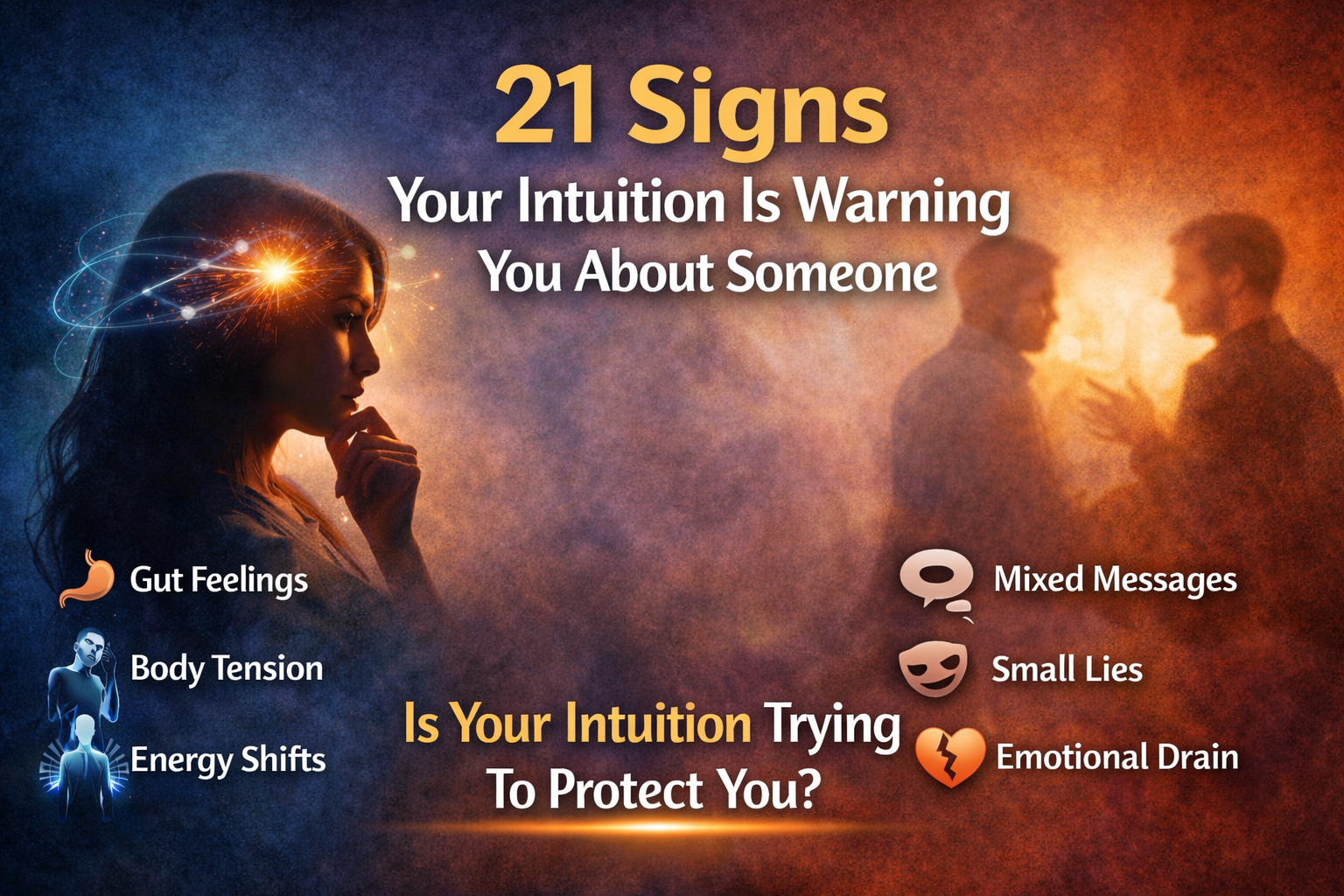
You felt it before anything went wrong.
Not in your thoughts. In your body.
A pause in your chest.
A shift in your energy.
A quiet voice asking you to pay attention.
You tried to explain it away.
You told yourself you were overthinking.
You gave them the benefit of the doubt.
But the feeling stayed.
It showed up in small moments.
In conversations that felt slightly off.
In the way your energy dropped after being around them.
This is where many people disconnect from themselves.
They wait for proof.
They ignore the pattern.
They silence the part of them that already knows.
Your intuition does not speak loudly at first.
It starts with subtle signals.
It repeats until you listen.
And when you learn how to recognize these signals, everything changes.
You stop second guessing yourself.
You stop explaining away red flags.
You start trusting what your energy has been showing you all along.
This is what your intuition has been trying to tell you.
Most People sense something feels off about a person long before they understand why.
The mind searches for logical proof. The body already knows.
Intuition works through quiet signals. These signals appear through body sensations, emotional shifts, subtle observations, and energy changes during interactions.
People often ignore those signals because they want harmony. They want connection. They want the situation to work.
Yet intuition rarely speaks through dramatic warnings. It appears through subtle changes that repeat.
A strange pause in conversation.
A tight feeling in your chest during a simple question.
A sudden loss of enthusiasm after spending time with someone.
These small moments form a pattern. Intuition gathers information quickly through micro behavior cues, tone shifts, emotional resonance, and energetic awareness.
Your nervous system processes thousands of details every second. Long before your mind explains what feels wrong, your body already recognizes the signal.
This article explores the most common signs your intuition warns you about someone. Each section includes examples from real relationship dynamics so you understand how intuition shows up in daily interactions.
Understanding these signals strengthens your ability to protect your emotional safety, trust your inner guidance, and recognize people who align with your energy.
Your intuition exists to protect you. Learning how it communicates changes the way you approach relationships forever.
The Nature of Intuitive Warnings

Intuition works through pattern recognition.
Your subconscious gathers emotional cues, facial expressions, tone shifts, body language, and inconsistencies in speech. These signals combine to create a feeling before the mind forms an explanation.
When something feels wrong about a person, your intuition rarely presents a detailed story. It presents a signal.
That signal might appear as tension, confusion, discomfort, or quiet alertness.
Many people override these signals because they cannot explain them logically. They assume intuition requires visible proof.
In truth, intuition often detects information before visible proof appears.
For example, imagine meeting someone who seems friendly and charismatic. They say all the right things. The conversation flows smoothly.
Yet something feels slightly uneasy.
Your body feels tense even though nothing obvious seems wrong. You cannot identify a specific reason for the discomfort.
Later you discover this person lies frequently or manipulates others.
Your intuition recognized subtle inconsistencies long before your mind understood the situation.
This happens because the nervous system reads micro signals.
Voice tone changes.
Eye contact patterns.
Timing between responses.
Emotional congruence between words and behavior.
These signals create intuitive awareness.
Learning to trust these signals strengthens emotional boundaries and protects you from unhealthy dynamics.
Sign 1. Your Body Feels Tense Around Them
One of the clearest signs intuition warns you about someone appears through physical tension.
Your body shifts into alert mode.
You might notice:
• tight shoulders
• shallow breathing
• stomach tension
• sudden fatigue
• difficulty relaxing
These reactions occur when the nervous system senses unpredictability or emotional risk.
For example, a client once described meeting a man through mutual friends. He seemed polite and respectful during their first dinner.
Yet she noticed her body felt rigid the entire evening.
She kept adjusting her posture and struggled to feel comfortable.
She assumed the tension came from first date nerves.
Over the next few weeks she discovered he had intense mood swings. His personality changed quickly between charming and irritated.
Her body sensed the emotional instability before her mind recognized the pattern.
Your nervous system processes emotional safety quickly.
When someone feels unpredictable or emotionally inconsistent, your body reacts immediately.
Sign 2. Conversations Leave You Feeling Drained

Energy shifts after interactions reveal important intuitive signals.
Pay attention to how you feel after spending time with someone.
Do you feel energized, calm, and clear?
Or do you feel confused, heavy, and mentally exhausted?
Emotional draining often indicates subtle psychological tension during the interaction.
For example, some people dominate conversations while presenting themselves as friendly. You might spend most of the interaction listening, validating, or adjusting your responses.
Afterward you feel depleted.
Your intuition recognizes the imbalance.
Healthy interactions leave both people feeling seen and energized. Draining interactions often signal emotional imbalance, manipulation, or hidden tension.
If every conversation with someone leaves you mentally tired, your intuition may signal caution.
Sign 3. Their Words and Energy Do Not Match

One powerful intuitive warning appears when someone’s words conflict with their emotional presence.
People communicate through more than language.
Tone, facial expression, timing, and emotional congruence reveal deeper truth.
For example, imagine someone telling you they care deeply about honesty.
Yet when discussing sensitive topics they avoid direct answers. They change subjects or respond vaguely.
Their words claim one value. Their behavior shows another.
Your intuition recognizes this mismatch immediately.
You may notice a quiet feeling of distrust even if you cannot explain why.
This occurs because the nervous system reads emotional authenticity.
When words and behavior conflict repeatedly, intuition signals caution.
Sign 4. You Notice Small Lies Early
Intuition often highlights small inconsistencies before larger patterns appear.
Many people dismiss small lies because they seem harmless.
Examples include:
• changing minor details in stories
• exaggerating achievements
• avoiding simple questions
• shifting timelines in conversations
These moments create subtle internal alarms.
For example, a client once described dating someone who often altered small details in stories about work. Nothing dramatic, but the details changed each time the story appeared.
Her intuition kept returning to the inconsistency.
Months later she discovered the person had misrepresented major aspects of his career.
Intuition rarely focuses on one event. It tracks patterns.
When you notice repeated inconsistencies, your inner guidance highlights a pattern forming.
Sign 5. You Feel Confused After Conversations
Clarity often signals emotional safety.
Confusion often signals psychological misalignment.
If interactions with someone frequently leave you questioning what just happened, your intuition may highlight subtle manipulation.
For example, imagine discussing a concern with someone.
Instead of addressing the issue directly, they redirect the conversation toward your reaction. They question your interpretation rather than responding to the original topic.
You leave the conversation unsure whether your concern was valid.
This dynamic creates confusion.
Your intuition recognizes when conversations distort clarity. Emotional safety creates straightforward communication. Persistent confusion signals something else.
Sign 6. Your Excitement Drops Suddenly
Another intuitive signal appears when initial enthusiasm fades quickly after interacting with someone.
At first you might feel excited to meet them.
During the interaction something shifts.
You lose interest. The energy feels heavy or forced.
Many people dismiss this reaction because they assume they should remain enthusiastic.
Yet intuition often signals misalignment through emotional withdrawal.
Your nervous system recognizes subtle discomfort and reduces engagement automatically.
This protective mechanism prevents deeper emotional investment in unstable dynamics.
Sign 7. You Feel Observed Instead of Seen
Healthy relationships create emotional presence.
You feel understood.
You feel respected.
Intuitive warnings often appear when someone studies you rather than connects with you.
Some individuals analyze others to gain social advantage.
During conversation you may notice they observe your reactions closely. They mirror your interests quickly. They ask questions in ways that feel investigative rather than curious.
The interaction feels slightly performative.
Your intuition recognizes the difference between authentic interest and strategic observation.
When someone studies your behavior instead of sharing emotional presence, your inner guidance may signal caution.
Sign 8. Your Boundaries Feel Challenged Early

Intuition often warns you when someone pushes boundaries quickly.
Examples include:
• pressuring you to share personal information
• pushing physical closeness early
• requesting favors soon after meeting
• ignoring subtle discomfort signals
Healthy people respect pacing.
When someone repeatedly tests boundaries early in a connection, your intuition recognizes potential manipulation.
Boundary pressure often reveals how someone handles limits. Respectful individuals slow down. Manipulative individuals push harder.
Sign 9. You Sense Hidden Anger
Some people mask frustration under politeness.
Your intuition may notice small flashes of irritation that others miss.
Examples include:
• a sharp tone when interrupted
• visible tension during disagreement
• subtle criticism disguised as humor
These signals appear briefly yet leave an emotional impression.
Your intuition tracks emotional consistency.
If someone’s calm demeanor occasionally breaks into sharp irritation, your inner guidance recognizes emotional instability.
Sign 10. Your Mind Searches for Excuses for Their Behavior
Another warning appears when you frequently explain someone’s behavior to yourself.
You might think:
They are just tired.
They did not mean it that way.
Maybe I misunderstood.
Occasional misunderstandings happen in every relationship.
Yet if you repeatedly reinterpret their actions to maintain harmony, your intuition may signal misalignment.
Healthy relationships require less mental justification.
Sign 11. Your Body Reacts During First Meetings
First impressions often involve intuitive awareness.
Your nervous system evaluates new people quickly.
During first meetings you might notice:
• sudden unease
• stomach tension
• difficulty making eye contact
• unexplained caution
These signals appear within minutes.
They do not require a story.
For example, a woman once described meeting a business partner who seemed charming during their first meeting. Yet she noticed an unusual tightness in her chest while discussing the project.
Months later she discovered financial dishonesty within the partnership.
Her intuition recognized subtle behavioral signals during the first meeting.
Sign 12. Their Charm Feels Overwhelming

Charisma can feel attractive.
Yet excessive charm early in relationships sometimes signals manipulation.
If someone praises you intensely, shares grand promises quickly, or accelerates emotional intimacy too fast, your intuition may feel cautious.
Healthy connections develop gradually.
Excessive charm early in a relationship often attempts to build trust rapidly before deeper patterns appear.
Sign 13. You Notice Subtle Disrespect Toward Others

One reliable intuitive signal appears when observing how someone treats people around them.
Watch how they interact with:
• service staff
• coworkers
• family members
• strangers
If someone shows kindness toward you but impatience or dismissiveness toward others, your intuition recognizes the inconsistency.
Behavior toward others reveals long term character more clearly than behavior during courtship.
Sign 14. Your Thoughts Return to the Same Concern
Intuition often repeats signals.
If you notice the same question appearing again and again about someone, pay attention.
For example:
Why did that conversation feel strange?
Why did they change their story?
Why do I feel uneasy when they call?
Repetition often indicates unresolved intuitive signals.
Your inner awareness continues presenting the question until the pattern becomes visible.
Sign 15. Your Energy Feels Different Around Them

Energy sensitivity often reveals intuitive information.
You may notice your mood changes quickly around certain people.
Examples include:
• feeling anxious in their presence
• losing focus during conversations
• feeling emotionally heavy afterward
These shifts occur when emotional dynamics feel unpredictable or draining.
Your intuition monitors these energy exchanges.
Sign 16. They Avoid Accountability
People who resist accountability often trigger intuitive discomfort.
When discussing mistakes they might:
• blame circumstances
• redirect responsibility
• minimize impact
Healthy individuals acknowledge mistakes openly.
If someone repeatedly avoids accountability, your intuition recognizes the pattern.
Sign 17. They Move the Relationship Too Fast
Rapid relationship progression often bypasses emotional safety.
Examples include:
• declaring strong feelings early
• pushing for commitment quickly
• planning major future steps immediately
Your intuition recognizes when emotional pacing feels unnatural.
Healthy connections allow trust to build gradually.
Sign 18. Your Friends Notice Something Off
External perspectives often confirm intuitive signals.
Trusted friends sometimes observe behavior patterns more clearly from the outside.
If multiple people express concern about someone in your life, your intuition may already share the same awareness.
Listening to outside feedback strengthens pattern recognition.
Sign 19. Silence Feels Uncomfortable With Them
Comfortable silence often signals emotional safety.
If silence with someone feels tense or awkward, your intuition may sense underlying discomfort.
You might feel pressure to fill every pause in conversation.
This tension often indicates subtle emotional misalignment.
Sign 20. You Feel Relief When They Leave
Your emotional response after someone leaves often reveals intuitive truth.
Notice how you feel when an interaction ends.
Do you feel calm and satisfied?
Or do you feel relief?
Relief signals your nervous system returning to safety.
Sign 21. You Keep Ignoring the Same Feeling
The most powerful intuitive signal appears through repetition.
When the same uneasy feeling returns repeatedly, your intuition continues sending the message.
Many people ignore early signals because they want relationships to work.
Yet intuition rarely disappears when ignored.
It becomes stronger until the pattern becomes visible.
Learning to Trust Intuition Without Fear
Trusting intuition does not mean assuming the worst about people.
Intuition invites observation.
When a signal appears, slow down.
Notice patterns.
Watch behavior over time.
Your inner guidance works alongside emotional awareness and experience.
The goal involves clarity rather than suspicion.
Healthy intuition supports calm decision making.
It does not create panic or obsession.
When you learn to recognize intuitive signals clearly, relationships become easier to navigate.
You recognize alignment sooner.
You notice warning signs earlier.
You protect your emotional energy with greater confidence.
Remember What Is Important:
Your intuition serves one purpose.
Protection.
It exists to guide you toward people who respect your energy and away from dynamics that drain it.
When something feels wrong about a person, pause before dismissing the signal.
Observe behavior.
Notice patterns.
Listen to your body’s responses during interactions.
Intuition rarely shouts.
It whispers.
Learning to trust those whispers protects your emotional well being and helps you build relationships rooted in honesty, respect, and genuine connection.Many people sense something feels off about a person long before they understand why.
